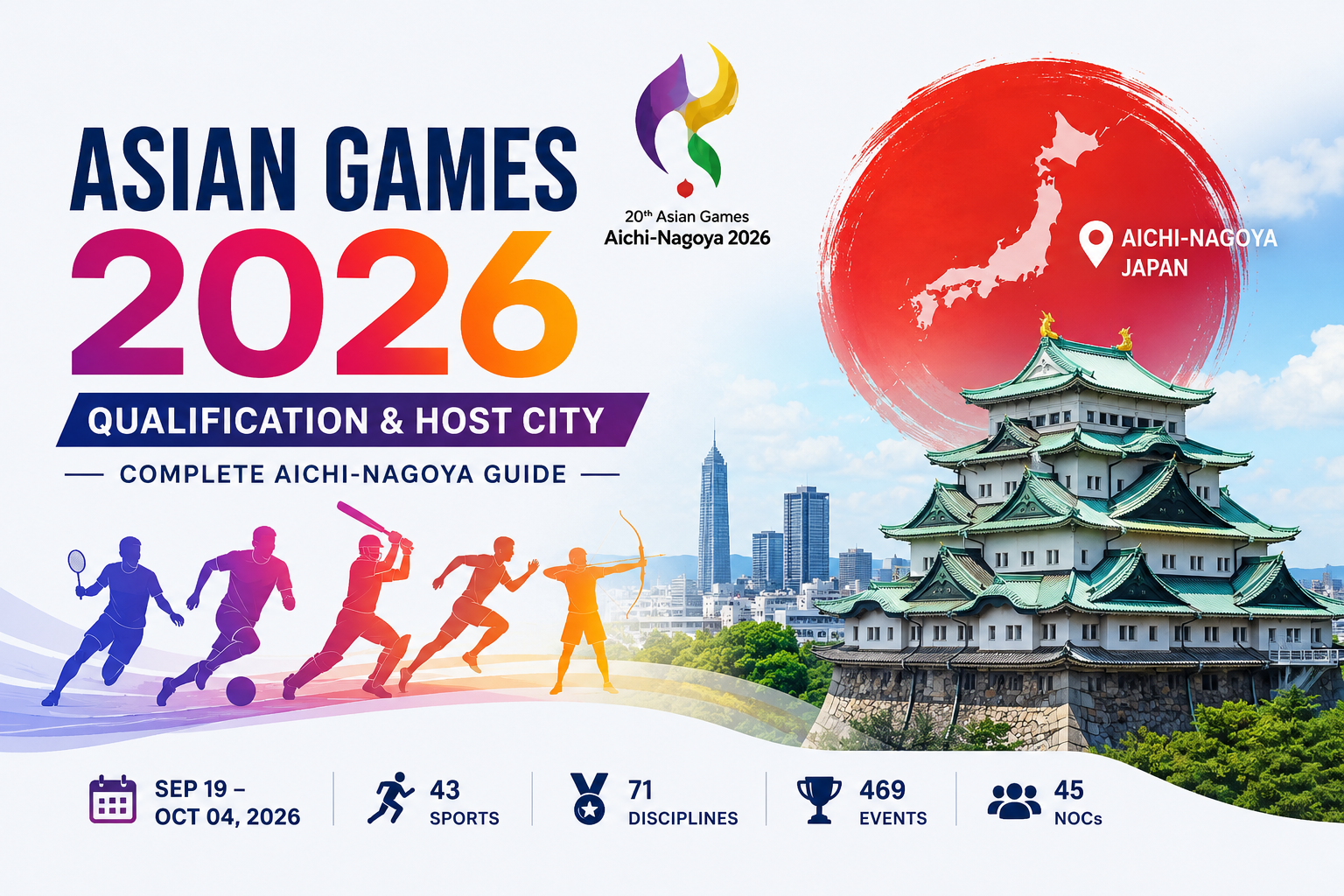
Asian Games 2026 Qualification & Host City: Complete Aichi-Nagoya Guide
Who will participate in the Asian Games, what will the rules and where will the Games be held? This guide brings together everything about Asian Games 2026 qualification — how athletes and teams earn their places — plus key information on host city Aichi-Nagoya.
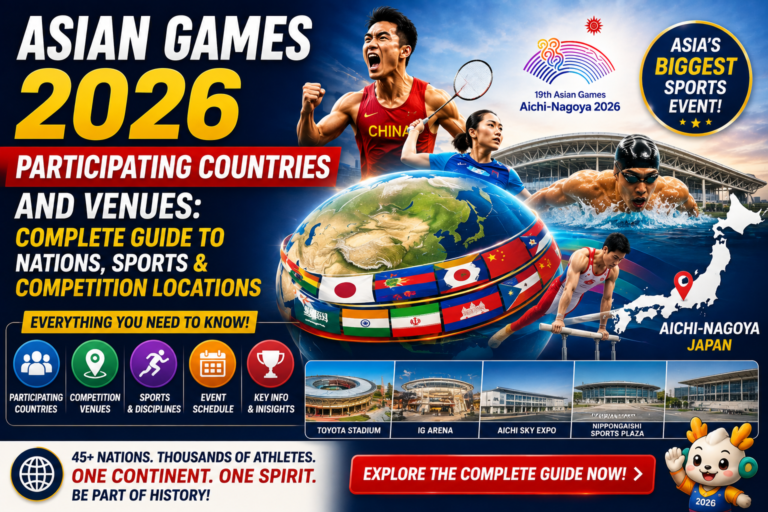
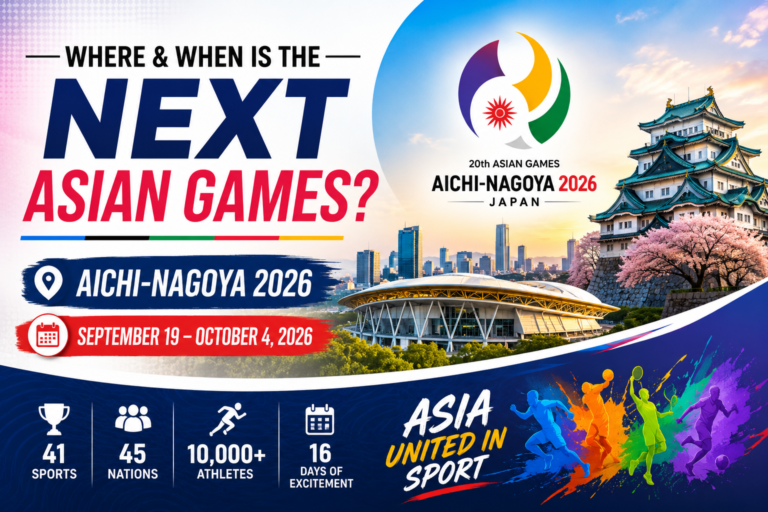
Japan will be hosting the 20th Asian Games, Aichi-Nagoya 2026 from September 19 to October 4, 2026 in Japan. With 43 sports, 469 medal events and 46 National Olympic Committees expected, it is one of the biggest sporting events ever held in Asia — see the full participating countries list.
This complete guide provides all the details about the athlete selection procedure, venues, dates, how athletes qualify for the Asian Games 2026, eligibility, the athlete selection criteria and qualification, the host city selection process, venues and schedules, and some other important information about the games, athletes, and fans of the Asian Games 2026.
What Is Asian Games 2026 Qualification?
Asian Games 26 Qualification is the call for qualification of athletes and teams for the Aichi-Nagoya 2026 Games.
No single test is required for all sports and/or participants. Rather, it is the respective international federation, Asian continental federation, NOC or competition regulations that lay down the manner in which places are earned and allocated.
Depending on the sport, qualification may involve:
- World rankings
- Asian rankings
- Continental championships
- Qualification tournaments
- Regional competitions
- Performance standards
- Fixed athlete quotas
- Team quotas
- Host-NOC allocations
- Sport-specific selection criteria
- Reallocation of unused places
Qualification vs Selection: Are They the Same?
No. Qualification and selection are two different stages.
This distinction is one of the most important parts of understanding the Asian Games.
Qualification
Qualification shall be that the athlete or team has fulfilled the qualification criteria in order to qualify for a position as determined by the requirements of the applicable sporting regulations.
Selection
The selection process is the one by which the national federation or NOC select the athlete or team which will represent the country.
Final Entry
Selected athletes must be entered formally into the Games, and this is done by following the entry procedures in force.
Who Can Qualify for the Asian Games 2026?
Athlete eligibility will be based on country, sport and relevant regulations.
1. Representation Through an NOC
Athletes take part by representing an eligible National Olympic Committee (NOC) competing at the Asian Games.
Representatives of 46 NOCs from Asia are to participate in Aichi-Nagoya 2026.
2. Sport-Specific Requirements
Every sport can impose additional conditions.
These may include:
- Age requirements
- Ranking requirements
- Qualification results
- Performance standards
- Weight categories
- Athlete quotas
- Team-size limits
- International federation eligibility
- Technical regulations
3. National Federation Requirements
Countries may also have their own selection procedures.
For example, a national federation can consider:
- Recent international results
- National championships
- Rankings
- Qualification performances
- Fitness
- Team balance
- NOC selection policies
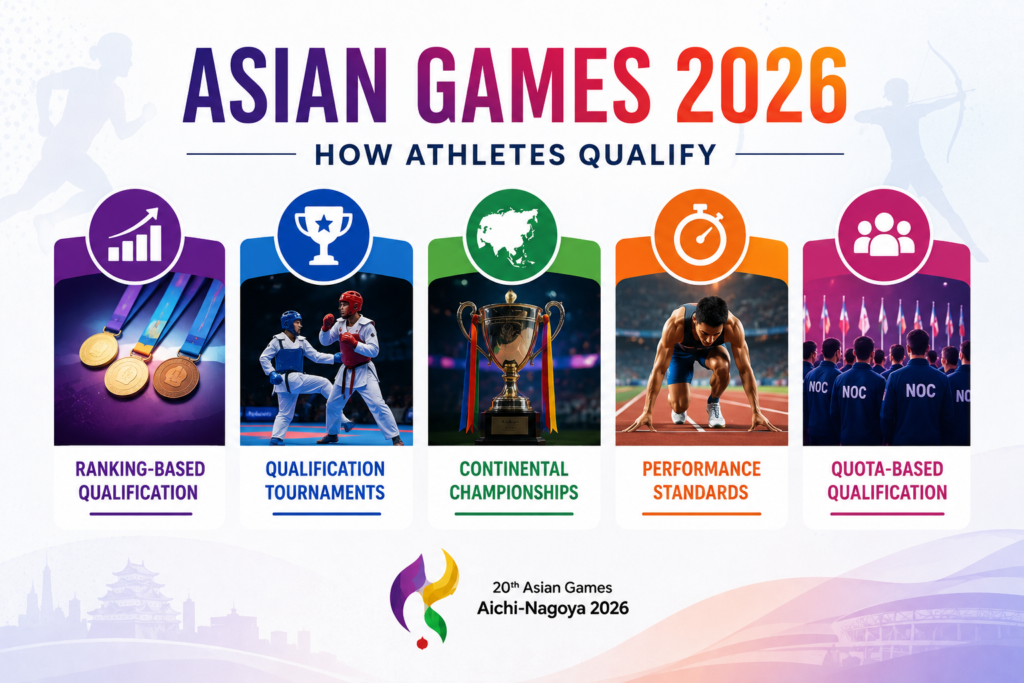
How Do Athletes Qualify for Asian Games 2026?
Although each sport has its own regulations, the major qualification models can be explained through several categories.
Ranking-Based Qualification
International and continental standing may be used in some sports to decide starting or spot selections and/or qualification for eligibility.
Rankings can affect a sport in many ways including:
- Direct qualification
- Seeding
- Athlete quotas
- NOC quotas
- Entry positions
Qualification Tournaments
Some sports use dedicated qualification competitions.
Athletes or teams compete for a limited number of available places, with the best performers advancing to the Asian Games.
Continental Championships
Asian championships can also form part of a sport’s qualification pathway.
An athlete may earn a quota position or improve their qualification position by achieving a required result at the designated continental competition.
Performance Standards
Some individual sports use minimum performance requirements.
These standards can involve:
- Times
- Distances
- Scores
- Rankings
- Marks
- Technical achievements
Quota-Based Qualification
There are compulsory quotas for the number of athletes/teams that each National Olympic Committee can field for many Asian Games events.
Asian Games 2026 Qualification by Sport
There are many differences in the qualification systems for sports and disciplines.
| Sport | Qualification Area to Check |
|---|---|
| Aquatics | Event standards, quotas and entry regulations |
| Archery | Qualification events and quotas |
| Athletics | Performance standards and national selection |
| Badminton | Ranking and NOC allocation |
| Baseball/Softball | Team qualification and continental allocation |
| Basketball | Team qualification and regional allocation |
| Boxing | Sport-specific quotas and qualification |
| Canoe/Kayak | Discipline-specific qualification |
| Cricket | Tournament structure, seeds and qualification |
| Cycling | Discipline-specific rankings and quotas |
| Equestrian | FEI eligibility and performance requirements |
| Esports | Game-specific regional qualification |
| Fencing | Qualification, ranking and NOC limits |
| Field Hockey | Continental/team qualification |
| Football | Asian qualification pathway and squad eligibility |
| Golf | Ranking and entry regulations |
| Gymnastics | Qualification and athlete-entry rules |
| Handball | Team qualification |
| Judo | Ranking and quota regulations |
| Kabaddi | Team qualification |
| Karate | Qualification, ranking and quotas |
| Kurash | Continental qualification |
| MMA | Sport-specific qualification and eligibility |
| Modern Pentathlon | Qualification and quota regulations |
| Padel | Sport-specific qualification |
| Rowing | Continental qualification |
| Rugby Sevens | Team qualification |
| Sailing | Class-specific qualification |
| Sepak Takraw | Continental/team qualification |
| Shooting | Qualification scores, quotas and entries |
| Skateboarding | Ranking and quota system |
| Soft Tennis | Ranking and qualification rules |
| Sport Climbing | IFSC qualification system |
| Squash | Ranking and NOC allocations |
| Surfing | Asian qualification and quotas |
| Table Tennis | Ranking and quota regulations |
| Taekwondo | Ranking/qualification and quotas |
| Tennis | Ranking and NOC limits |
| Teqball | Sport-specific qualification |
| Triathlon | Ranking and qualification |
| Volleyball | Team qualification |
| Weightlifting | Weight-class and quota rules |
| Wrestling | Continental qualification and quotas |
| Wushu | Event-specific qualification |
Asian Games 2026 Football Qualification
Football is one of the biggest attractions at the Asian Games, but men’s and women’s qualification should be treated separately.
When explaining Asian Games 2026 football qualification, readers should look for:
- Number of teams
- Qualification pathway
- AFC involvement
- Age requirements
- Squad restrictions
- Host arrangements
- Withdrawals
- Replacements
- Final squad selection
Asian Games 2026 Cricket Qualification
Cricket will be played in the T20 format at Aichi-Nagoya 2026.
Its competition structure differs from many other Asian Games sports.
The latest official information shows that the men’s cricket competition uses a group and knockout structure, with seeded teams entering at different stages. India, for example, entered as the defending Asian Games champion and received a direct quarterfinal seeding.
The Asian Games 2026 Athlete Selection Process
After qualification, the athlete’s journey is not necessarily finished.
The process generally moves through several stages.
1: Eligibility
The athlete meets the general and sport-specific eligibility requirements.
2: Qualification
The athlete earns a qualifying result, ranking position or quota place.
3: Quota Allocation
The available place is assigned according to the sport’s regulations.
4: National Selection
The relevant federation or NOC selects the athlete or team.
5: Entry by Name
The selected athletes are formally entered into their events.
6: Final Confirmation
Entries, withdrawals and reallocations are finalized before competition.
What Happens If a Qualified Team Withdraws?
If a qualified athlete or team withdraws, the relevant regulations may provide a procedure for reallocating that place.
The replacement process can depend on:
- The reason for withdrawal
- The sport
- The original qualification system
- Available replacement teams
- NOC confirmation
- Deadlines
Football provides a useful example of how Asian Games participation can change after withdrawals. India’s men’s team withdrew from the competition, after which the Philippines received the available place.
What Happens If an Athlete Does Not Meet the Qualification Requirements?
An athlete may miss the Games even after competing successfully during the qualification period.
Potential reasons include:
- Not meeting an eligibility condition
- Failing to reach a required performance standard
- Exceeding an NOC quota
- Not being selected by the national federation
- Injury
- Withdrawal
- Administrative problems
- Missing an entry deadline
- Sport-specific restrictions
Frequently Asked Questions
How do athletes qualify for the Asian Games 2026?
There are a variety of qualification systems for athletes, depending on sport. These can include ranking, qualifying tournaments, championships and performance standards/quotas.
Is there one qualification system for all 43 sports?
No. Qualification is sport-specific, and different disciplines can use different ranking, quota and qualification procedures.
Does qualifying guarantee an athlete a place at the Asian Games?
Not necessarily. National selection and final entry procedures can still apply after an athlete meets the relevant qualification requirements.
Who selects athletes for the Asian Games?
Normally, the athlete’s national federation and/or NOC, in accordance with the national and international regulations, select the finalists.
In 2026, where are the Asian Games going to be organized?
The Games are based in Aichi Prefecture and Nagoya City, Japan, but some events are taking place away from where the host city is.
Final Thoughts
The Asian Games 2026 Qualification systems are different for each sport, based on ranking, qualification tournaments and standards, and quotas. Aichi-Nagoya 2026 brings together 46 NOCs across 43 sports from 19 September to 4 October 2026 — the third time Japan has hosted, as our Asian Games host countries list shows. The Games in Japan are set to be a celebration of Asian sport and competition, with Aichi and Nagoya at its very core.